Accession no: ARC-KA-0596
Field No: Korbek 1/Uripok
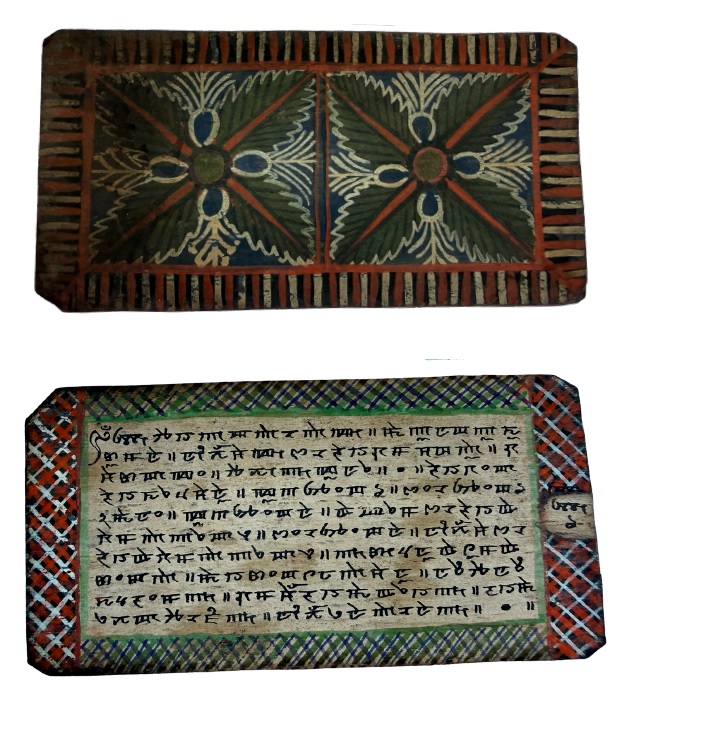
Title: Kangabam Yumdaba Puya
Material: Agar bark folio
Script: Old Meitei Mayek
Language: Meiteirol
Date/Period: Late 19th Century
Genre/Text Type: Genealogy of Kangabam Clan of Meitei
Description of Contents:
This manuscript is the family geneaolgy of Kangabam
Chidananda, popularly known as General Thangal (1806-1891).
Physical Description:
Unbound folio manuscript comprising 8 folios (ff. 1r–10v), measuring 10.5 × 20 cm,
trimmed at the edges. It is preserved in a wooden box measuring 32 cm in length,
20 cm in breadth, and 8.5 cm in height. The manuscript is wrapped in a new white
cotton cloth.
Provenance:
The manuscript belonged to Kangabam ongbi Yumnam Shyama of Uripok Khoisnam Leikai, Imphal West. The custodian is the wife of the late Kangabam Romoni, the greatgreat grandson of General Thangal, who served five kings, took part in the Anglo-
Manipuri War, 1891, and was executed after the defeat of the Manipuris.
Digitization Note:
Digitized on 8 May, 2026 by Wangam Somorjit, Robinson Wahengbam, Ratika Yumnam,
Linthoi Khoirom, Linthoi Wangkhem, Yensenbam Piparel, RK Sydney and Thoungamba
Naorem.
Full Citation:
Kangabam Yumdaba Puya, Kangabam ongbi Yumnam Shyama Collection, ARC-KA-00596, Advanced Research Consortium Library & Archives (ARCLA), Manipur.
____________________________________________________________________________________________________________________________________________________________________________________________________
Accession no: ARC-KA-0597
Field No: Korbek 1/Kumbi
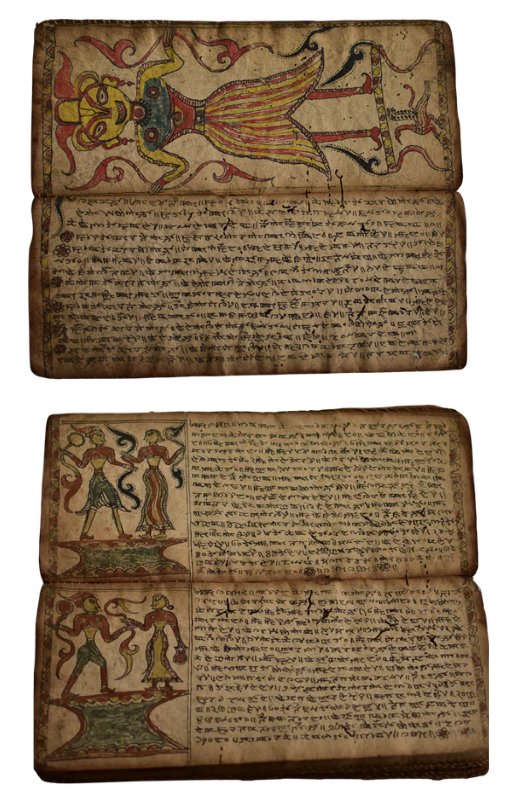
Title: Subika Laisaba
Material: Handmade Paper
Script: Old Meitei Mayek
Language: Meiteirol
Date/Period: 19th Century
Genre/Text Type: Astrology/Subika Art
Description of Contents:
Subika is an illustrated manuscript. It is a manual for divination.
Physical Description:
Folded manuscript comprising 35 panels (r35–v35), measuring 16.6 ft in length. Each panel measures 34 × 15 cm. It has two wooden covers. The panels are stitched together with thread. The recto and verso are glued together using two folios of paper, making the manuscript unusually thick
Provenance:
The manuscripts belonged to Khangembam Sangkho, who was an astrologer (Panji) by profession and was born in the 1870s. The family showed us the kuthi of Sangkho’s son, Ahong, whose birth year was recorded in the Saka era (1830); when converted to the Common Era, it corresponds to 1908 CE. According to the family tree reconstructed by the Khangembam family, Sangkho was the youngest among six sons of Khambaton. Khambaton was the son of Khamba, grandson of Chaoton and great-grandson of Chaobungba. Choma, Chungba, Chingheiba, and Chingsamba were earlier ancestors in the lineage. Interestingly most of the personal names of the ancestors of this family start with the term such as “ chao” and “Ching”.
The original custodian, Sangkho, was an astrologer by profession. His elder brother, Angangjao, was the Khullakpa (Chief) of the Kumbi Village, and another elder brother, Tolem, was a Subedar. The family had strong connections with the royal court. A walking stick gifted to the custodian’s father by Maharaja Bodhchandra (r.1941-1949 CE) was also shown to us.
The manuscript is now under the care of Sangkho’s grandson Khangembam Nimaichand of Kumbi village, Bishnupur District, Manipur.
Rarity: Parallel copies identified.
Digital Format:
This record describes a digital surrogate of the manuscript. The physical manuscript remains in private custody.
Digitization Note:
Digitized on 21 March, 2026 by Wangam Somorjit, Yumnam Sapha Wangam Apanthoi, Maradona Ashangbam, Robinson Wahengbam, Ratika Yumnam, Wangkhem Linthoi, Rajkumari Sagarika, Rajkumar Sydney, and Yensenbam Pibarel.
Full Citation:
Subika Laisaba, Khangembam Nimaichand Collection, ARC-KA-00597, Advanced Research Consortium Library & Archives (ARCLA), Manipur.
____________________________________________________________________________________________________________________________________________________________________________________________________
Accession no: ARC-KA-0598
Field No: Korbek 51/Khongman
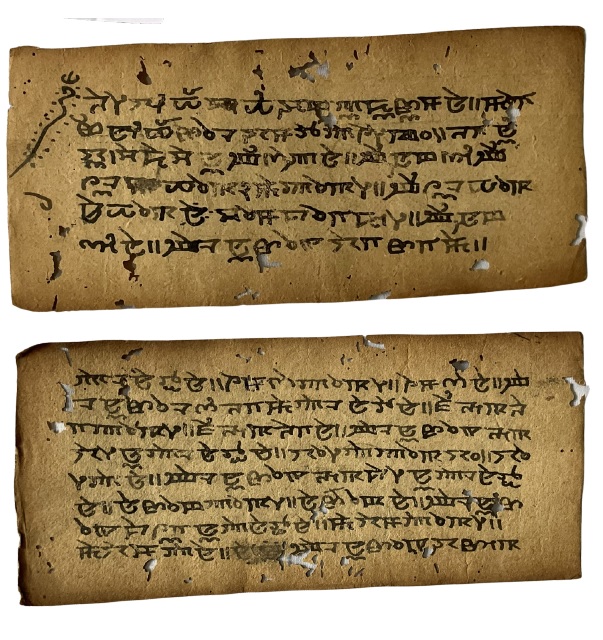
Title: Moirang Ningthourol Yimtapa
Material: Handmade Paper
Script: Old Meitei Mayek
Language: Archaic Meiteilon
Date/Period: 19th Century
Genre/Text Type: Genealogy of the Royalty of Moirang.
Description of Contents: This manuscript deals with the branching off of the many
families from the Moirang Royalty.
Physical Description:
Unbound folio manuscript comprising 15 folios (ff. 1r–15v), measuring 20.6 × 9.5
cm.It is covered by two wooden covers.
Provenance:
The manuscript belonged to Pandit Achouba Moirangthem Chandra Singh (b.1895-
d.1976), son of Pandit Achouba Moirang Keirungba (a.k.a Moirang Hingchabi, d. 1936
CE) of Khongman Moirang Pandit Leikai, Imphal East. According to the present
custodian, Dr. Moirangthem Ranjana, most of the collections date from the reigns
of Maharaja Gambhir Singh (r. 1825–1834 CE), Maharaja Narasingh (r. 1834–1844 as
Regent and 1844–1850 as King), and Maharaja Chandrakirti (r. 1850–1886 CE). The
collection is one of the largest korbek holdings in Manipur. Moirang Hingchabi
served as the Pandit Achouba at the court of Maharaja Churachand. He inherited his
panditship from his maternal grandfather, Paonam Pandit, who served at the court
of Maharaja Chandrakirti.
Rarity: Multiple copies are known.
Digital Format
This record describes a digital surrogate of the manuscript. The physical
manuscript remains in private custody.
Digitization Note:
Digitized on 17 May 2026 by Yumnam Sapha Wangam Apanthoi, Akoijam Malemnganbi,
Wangam Somorjit, Robinson Wahengbam, Yumnam Ratika, Wahengbam Vandana, Yensenbam
Pibarel, Linthoi Wangkhem, Ningthoukhongjam Girija, Naorem Thoungamba, Namoijam
Nibas, Rajkumar Sydney, and Haobijam Prithingamba.
Full Citation:
Moirang Ningthourol Yimtapa, Pandit Achouba Moirangthem Chandra Singh Collection,
ARC-KA-00598, Advanced Research Consortium Library & Archives (ARCLA), Manipur.
____________________________________________________________________________________________________________________________________________________________________________________________________
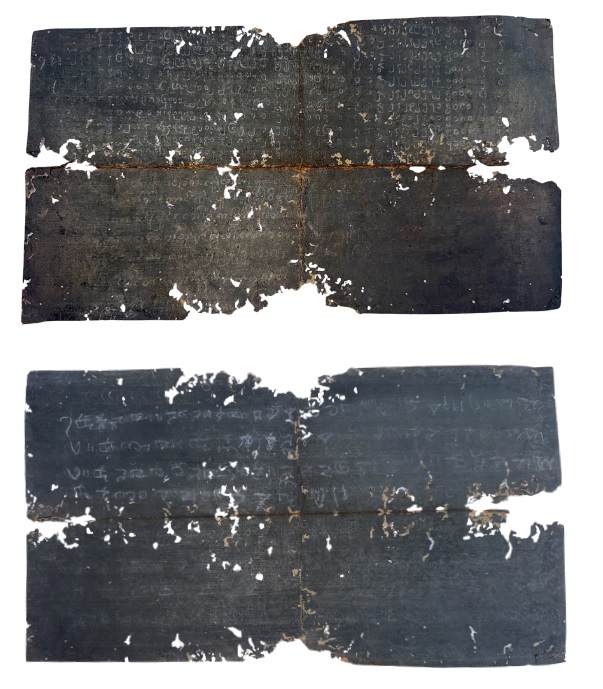
Accession no: ARC-KA-0600
Field No: Korbek 19/Khongman
Title: Unidentified text
Material: Thick handmade blackened paper, written in white chalk or pigment
Script: Burmese (?) and Meitei Mayek
Language: unknown
Date/Period: 18th-19th Century
Genre/Text Type: unknown
Description of Contents: unknown
Physical Description:
Folded manuscript comprising two panels (Panels 1r–2v), each measuring 12 × 40.5
cm. This manuscript is a blackened parabaik written in Burmese script and
numerals. On the verso of the manuscript, Meitei Mayek script is visible, probably
written over erased Burmese text.
Provenance:
The manuscript belonged to Pandit Achouba Moirangthem Chandra Singh (b.1895-
d.1976), son of Pandit Achouba Moirang Keirungba (a.k.a Moirang Hingchabi, d. 1936
CE) of Khongman Moirang Pandit Leikai, Imphal East. According to the present
custodian, Dr. Moirangthem Ranjana,grand-daughter of Pandit Chandra Singh, most of
the collections date from the reigns of Maharaja Gambhir Singh (r. 1825–1834 CE),
Maharaja Narasingh (r. 1834–1844 as Regent and 1844–1850 as King), and Maharaja
Chandrakirti (r. 1850–1886 CE). The collection is one of the largest korbek
holdings in Manipur. Moirang Hingchabi served as the Pandit Achouba at the court
of Maharaja Churachand. He inherited his panditship from his maternal grandfather,
Paonam Pandit, who served at the court of Maharaja Chandrakirti.
Rarity: Unique manuscript; no known parallel copies
Digital Format:
This record describes a digital surrogate of the manuscript. The physical
manuscript remains in private custody.
Digitization Note:
Digitized on 17 May 2026 by Yumnam Sapha Wangam Apanthoi, Akoijam Malemnganbi,
Wangam Somorjit, Robinson Wahengbam, Yumnam Ratika, Wahengbam Vandana, Yensenbam
Pibarel, Linthoi Wangkhem, Ningthoukhongjam Girija, Naorem Thoungamba, Namoijam
Nibas, Rajkumar Sydney, and Haobijam Prithingamba.
Full Citation:
Burmese and Meitei Mayek Parabaik, Pandit Achouba Moirangthem Chandra Singh
Collection, ARC-KA-0600, Advanced Research Consortium Library & Archives (ARCLA),
Manipur.
____________________________________________________________________________________________________________________________________________________________________________________________________
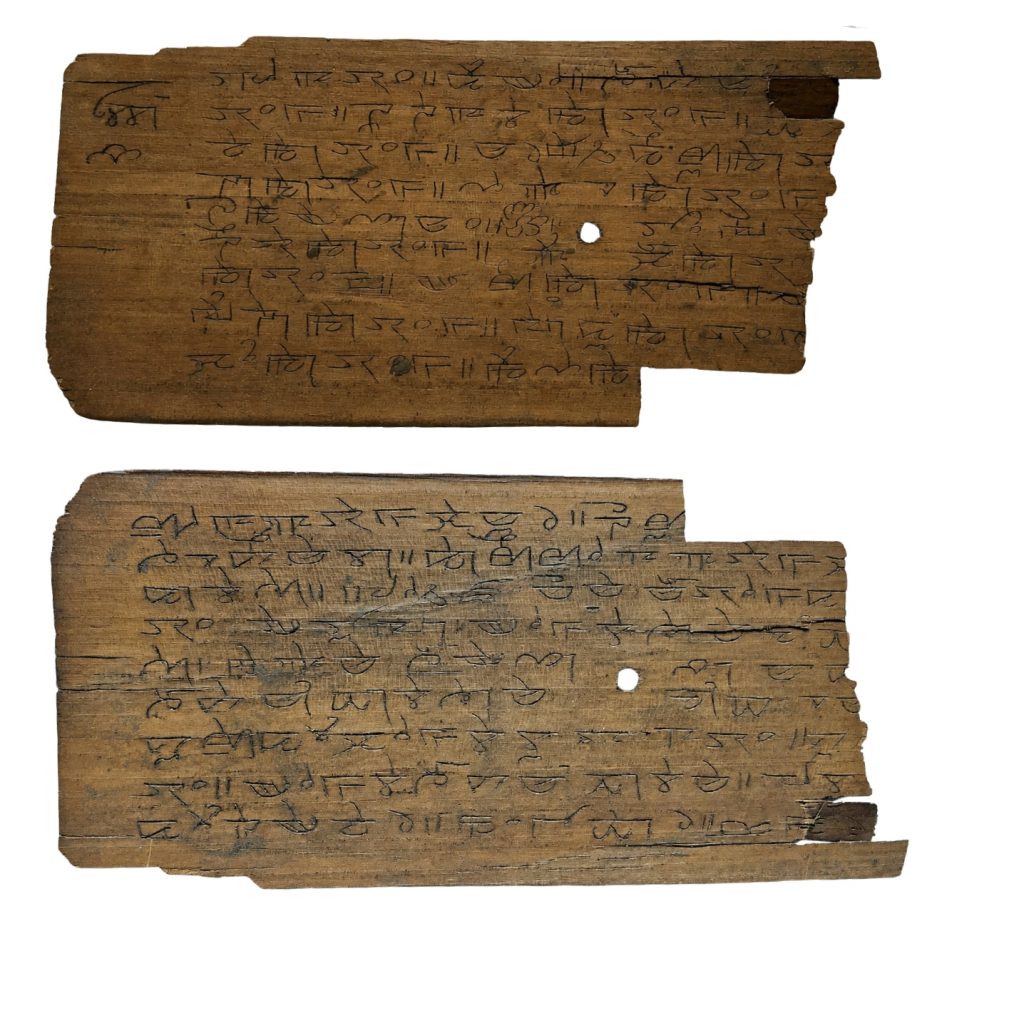
Accession no: ARC-KA-0601
Field No: Korbek 1/Khongman
Title: Unidentified text
Material: palm-leaf manuscript with incised script
Script: Meitei Mayek
Language: Old Meiteirol
Date/Period: c.18th-19th Century
Genre/Text Type: Unknown
Description of Contents: Unknown
Physical Description:
A fragment of a palm-leaf manuscript with incised Meitei Mayek script and with a
central binding hole. Evidence of rubbing with lampblack, charcoal, or pigment is
visible, making the letters become visible.
Provenance:
The manuscript belonged to Pandit Achouba Moirangthem Chandra Singh (b.1895-
d.1976), son of Pandit Achouba Moirang Keirungba (a.k.a Moirang Hingchabi, d.
1936 CE) of Khongman Moirang Pandit Leikai, Imphal East. According to the present
custodian, Dr. Moirangthem Ranjana,grand-daughter of Pandit Chandra Singh, most
of the collections date from the reigns of Maharaja Gambhir Singh (r. 1825–1834
CE), Maharaja Narasingh (r. 1834–1844 as Regent and 1844–1850 as King), and
Maharaja Chandrakirti (r. 1850–1886 CE). The collection is one of the largest
korbek holdings in Manipur. Moirang Hingchabi served as the Pandit Achouba at the
court of Maharaja Churachand. He inherited his panditship from his maternal
grandfather, Paonam Pandit, who served at the court of Maharaja Chandrakirti.
Rarity: Unique manuscript; no known parallel copies
Digital Format
This record describes a digital surrogate of the manuscript. The physical
manuscript remains in private custody.
Digitization Note:
Digitized on 17 May 2026 by Yumnam Sapha Wangam Apanthoi, Akoijam Malemnganbi,
Wangam Somorjit, Robinson Wahengbam, Yumnam Ratika, Wahengbam Vandana, Yensenbam
Pibarel, Linthoi Wangkhem, Ningthoukhongjam Girija, Naorem Thoungamba, Namoijam
Nibas, Rajkumar Sydney, and Haobijam Prithingamba.
Full Citation:
Palm-leaf Manuscript, Pandit Achouba Moirangthem Chandra Singh Collection, ARC-KA-
0601, Advanced Research Consortium Library & Archives (ARCLA), Manipur.
____________________________________________________________________________________________________________________________________________________________________________________________
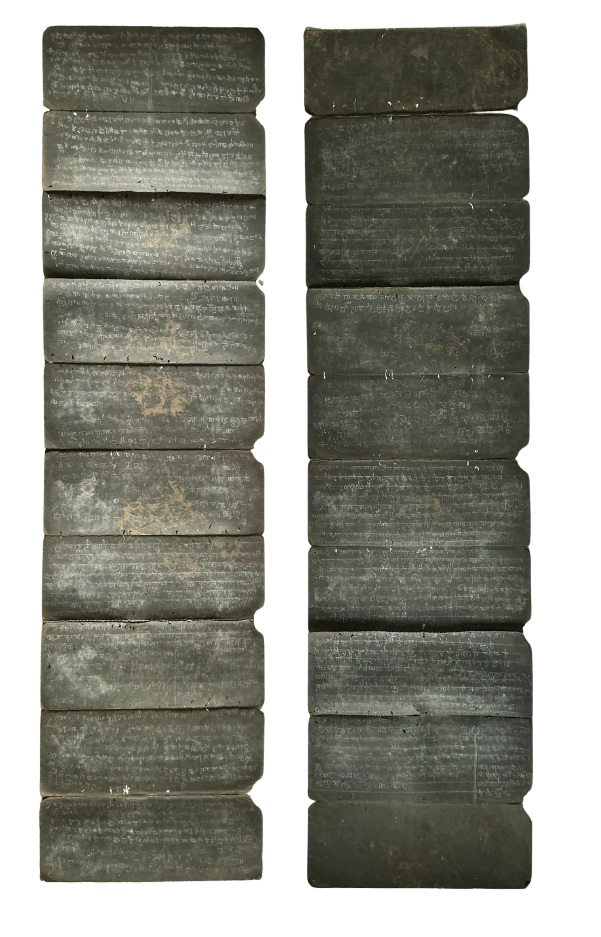
Accession no: ARC-KA-0602
Field No: Korbek 11/Khongman
Title: Unidentified text
Material: Thick handmade blackened paper, written in white chalk or pigment
Script: Old Meitei Mayek
Language: Archaic Meiteilon
Date/Period: c.18th-19th Century
Genre/Text Type: Unknown
Description of Contents: Unknown
Physical Description:
Folded black manuscript comprising 10 panels (Panels 1r–10v), each measuring 15 ×
38 cm. This manuscript is a black korbek written in Meitei Mayek using white chalk
or pigment. Unlike other styles of writing, the Meitei Mayek script is seen with a
shirorekha or headstroke, as in Devanagari.
Provenance:
The manuscript belonged to Pandit Achouba Moirangthem Chandra Singh (b.1895-
d.1976), son of Pandit Achouba Moirang Keirungba (a.k.a Moirang Hingchabi, d. 1936
CE) of Khongman Moirang Pandit Leikai, Imphal East. According to the present
custodian, Dr. Moirangthem Ranjana, most of the collections date from the reigns of
Maharaja Gambhir Singh (r. 1825–1834 CE), Maharaja Narasingh (r. 1834–1844 as
Regent and 1844–1850 as King), and Maharaja Chandrakirti (r. 1850–1886 CE). The
collection is one of the largest korbek holdings in Manipur. oirang Hingchabi
served as the Pandit Achouba at the court of Maharaja Churachand. He inherited his
panditship from his maternal grandfather, Paonam Pandit, who served at the court of
Maharaja Chandrakirti.
Rarity: Unique manuscript; no known parallel copies
Digital Format
This record describes a digital surrogate of the manuscript. The physical
manuscript remains in private custody.
Digitization Note:
Digitized on 17 May 2026 by Yumnam Sapha Wangam Apanthoi, Akoijam Malemnganbi,
Wangam Somorjit, Robinson Wahengbam, Yumnam Ratika, Wahengbam Vandana, Yensenbam
Pibarel, Linthoi Wangkhem, Ningthoukhongjam Girija, Naorem Thoungamba, Namoijam
Nibas, Rajkumar Sydney, and Haobijam Prithingamba.
Full Citation:
Black Meitei Mayek Manuscript, Pandit Achouba Moirangthem Chandra Singh Collection,
ARC-KA-0602, Advanced Research Consortium Library & Archives (ARCLA), Manipur
______________________________________________________________________________________________________________________________________________________________________________
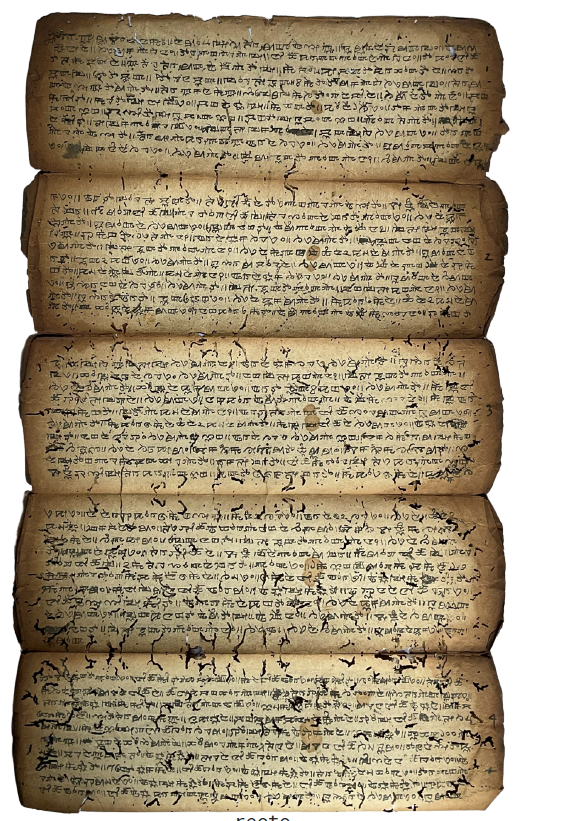
Accession no: ARC-KA-00603
Field trip ref no: Korbek 26/Khongman 2nd
Title: Narot Gita
Material: Thin Paper (handmade)
Script: Old Meitei Mayek
Language: Archaic Meiteilon
Date/Period: c 18th – 19th Century
Genre/Text Type: The text appears to be a Manipuri version of the Narda Gita.
The text mentions that the content resulted when the original Lairik was divided
into parts and was commissioned by the Tripuri King Tala Manik (Dharma Manikya,
r.1714-1725 CE). Interestingly, the Manipuri text Takhelngamba mentions that the
Gita was brought by the Meitei King from Tripura as a war booty.
Physical Description:
Folded manuscript (108.5 x 13.5 cm) comprising nine panels (1r–9v), written on
both recto and verso in Old Meitei Mayek in Archaic Meiteilon. The recto as well
as the verso, is written in black ink.
Provenance:
The manuscript belonged to Pandit Achouba Moirangthem Chandra Singh (b.1895-
d.1976), son of Pandit Achouba Moirang Keirungba (a.k.a Moirang Hingchabi, d.
1936 CE) of Khongman Moirang Pandit Leikai, Imphal East. According to the
present custodian, Dr. Moirangthem Ranjana, most of the collections date from
the reigns of Maharaja Gambhir Singh (r. 1825–1834 CE), Maharaja Narasingh (r.
1834–1844 as Regent and 1844–1850 as King), and Maharaja Chandrakirti (r. 1850–
1886 CE). The collection is one of the largest korbek holdings in Manipur.
oirang Hingchabi served as the Pandit Achouba at the court of Maharaja
Churachand. He inherited his panditship from his maternal grandfather, Paonam
Pandit, who served at the court of Maharaja Chandrakirti.
Digital Format:
This record describes a digital surrogate of the manuscript. The physical
manuscript remains in private custody.
Digitization Note:
Digitized on 24 May 2026 by Wangam Somorjit, Yumnam Sapha Wangam Apanthoi,
Wahengbam Robinson, Yumnam Ratika, Thoungamba Naorem, Mayanglambam Kabirdas,
Rajkumar Sydney, Yensenbam Pibarel, Wahengbam Vandana, Ningthoukhongjam Girija,
Akoijam Malemnganbi, Namoijam Nibas and Haobijam Prithingamba.
Full Citation:
Pandit Achouba Moirangthem Chandra Singh Collection,ARC-KA-00603, Advanced
Research Consortium Library & Archives (ARCLA), Manipur. llection,ARC-KA-00603.
GOTO PAGE