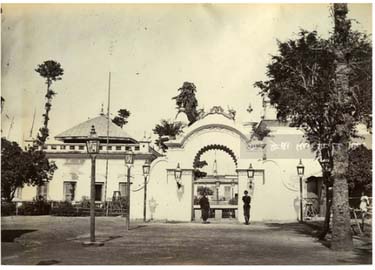
 Manipur, Rajah’s Palace
ARC-PHP-301
Albumen print, c. 1868
24 × 30.5 cm
Photographer: Dr. R. Brown
On Display — Ground Floor
Archival history: Previously held by Bruno Tartarin, 60 rue du Mad Arnaville, 54330, France.
Immediate source of acquisition: Acquired in 2025 from Bruno Tartarin (Photovintagefrance).
Description
This vintage albumen print was acquired from PhotoVintageFrance, Arnaville, France, in April 2025. Photography was officially introduced to the Kingdom of Manipur in 1868, a fact recorded in the royal chronicle Cheitharol Kumbaba. The earliest known photographs from this period focused on the architectural features within the Kangla Palace complex. This photograph could be among the first photographs ever taken in Manipur inside the Kangla by the Political Agent Dr. R. Brown, with the permission of Maharaja Chandrakirti (r.1850-1886 CE) which is recorded in the court chronicle.
“ 1868 CE : The Phiringi Sahep (British) entered the palace building and took photographs of the people in front of the Utra building.”
This particular photograph is believed to have been taken around 1868, shortly before the catastrophic earthquake of 1869 ( Popularly known as the Cachar Earthquake) , which caused widespread destruction, including to many of the palace structures. Of particular interest in this image is the original metal roof of the Shri Govindajee Temple. The temple was commissioned by Maharaja Narasingh and constructed in 1846. The royal chronicle notes:
“In January 1846 CE, all the buffaloes of the land were employed to carry bricks from Langthabal. As King Chinglen Nongdren Khomba (Gambhir Singh) passed away before fulfilling his wish to build a brick temple for Shri Govindajee, King Narasingh declared, ‘I will construct the brick temple in the name of my cousin, King Gambhir Singh. By royal order, Friday, the 16th of January 1846, was chosen as the auspicious date. The foundation was laid at dawn, following the morning yuthak, between the 6th and 7th pung of the water clock”
Following the destruction caused by the 1869 earthquake, Maharaja Chandrakirti Singh undertook the reconstruction of the temple. The new structure was completed with a concrete dome, replacing the earlier metal roof. This reconstruction constitutes the form of the temple as it stands today within the Kangla Fort.
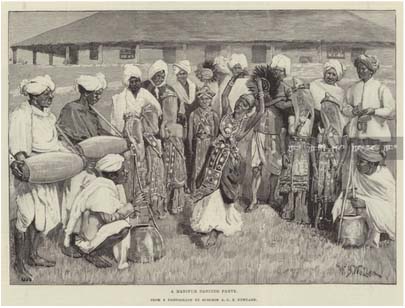 A Manipur Dancing Party
From a photograph by Surgeon A. G. E. Newland
The Illustrated London News, 1891
19 x 27 cm
Artist: William Barnes Wollen
On Display — Ground Floor
ARC-PRT-001
Description
This vintage newspaper clipping was acquired from a private collector in the United Kingdom in 2025. The engraving shows a Manipuri dancing party in Raas costume. Five dancers appear in Gopi costumes and two in Krishna costumes, an uncommon combination. Two drummers are visible, along with two Bengala one-string instruments called ektara, which is also unusual for a Manipuri dance troupe. The scene appears to represent what Europeans referred to as a nautch performance rather than the ritual Raas Lila traditionally performed in temples.
There was a department called Sangsang in Manipur where dance performances were staged during royal tours or for welcoming guests. Later, similar performers emerged as Maraibak Jagoi Sabi, which became quite popular during the Second World War but was later discontinued.
About the Artist
William Barnes Wollen was an English artist renowned for his vivid depictions of battle scenes, historical events, and military engagements. Born in Leipzig and trained at University College School and the Slade School of Fine Art, he exhibited regularly at the Royal Academy and the Royal Institute of Painters in Water Colours from 1879 to 1922.
Wollen served as a special war artist during the Boer War for The Sphere, and later illustrated scenes from the First World War. Many of his works are held in national military museums in the United Kingdom and abroad. He spent most of his career in London, where he died in 1936.
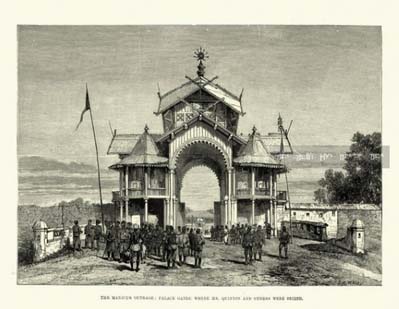 The Manipur Outrage: Palace Gate where Mr. Quinton and Other were Seized
The Illustrated London News,
18 April 1891
16 x 23 cm
Artist: Daniel Robert Warry
On Display — Ground Floor
ARC-PRT-002
Description
This wood engraving print depicts the Western Gate of Kangla Fort in Imphal, Manipur, during the Anglo-Manipuri War of 1891. It shows the location where several British officials, including the Chief Commissioner of Assam, James Quinton, were seized.
The gate features a fusion of architectural traditions: Meitei elements represented by the chirong (forked roof finial similar with the Japanese Shinto chigi), Buddhist influence reflected in the pagoda-style base of the Hindu śikhara, and European style seen in the conical roof. It was designed wide enough for an elephant with a howdah to pass through. From the gate, one can see the Uttra building and the two leogryph statues (Nongsha, later on Kanglasha). After the defeat of the Manipuris in the Anglo-Manipuri War, the occupying British forces burned the gate.
About the Artist
Daniel Robert Warry was a 19th-century British draughtsman, illustrator, and architect who specialised in architectural and antiquarian drawings. His works were frequently wood-engraved and published in The Graphic in 1881–82 and 1884. He also worked as a lithographer in London.
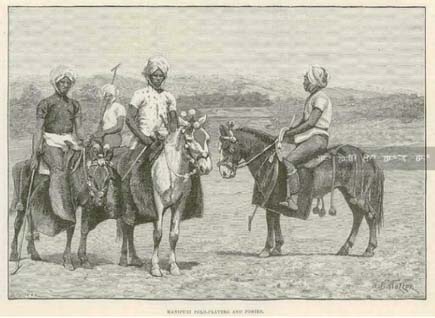 Title: Manipuri Polo Players and Ponies
The Illustrated London News,
2 May 1891
Dimensions: Sheet: 18 x 24 cm
Engraver: William Barnes Wollen
Medium: Wood Engraving
Classification: Prints
On Display — Ground Floor
ARC-PRT-003
Description
This wood-engraving print shows four Meitei polo players in traditional Sagol Kangjei match costumes. The engraving is adapted from a photograph and was published in The Illustrated London News on May 2, 1891. It appeared in connection with the news of the Anglo-Manipuri War, a time when the word “Manipur” was on every Englishman’s lips, as noted in The Graphic on May 9, 1891.
Sagol Kangjei, the original form of modern polo, is believed to have been introduced by the proto-historic King Kangba in pre-Christian Manipur. First played during the festival Ukrong Hongba, it began with dribbling a bamboo root and soon evolved into a horseback game. Another early reference appears during King Nongda Lairen Pakhangba’s time (33 AD), when two teams of seven—later deified as gods—played a kangjei match.
Though some sources date the game’s popularity to the 15th–16th centuries during the reign of King Kyamba, the first clear record appears in 1606 CE during King Khagemba’s reign. Manipuris carried the game to Cachar and Sylhet during Burmese invasions in the 18th–19th centuries, where British officers first saw and played it. This led to the formation of the world’s first polo club, Silchar Kangjei Club (1859), followed by the Calcutta Polo Club (1862), and later its spread to England and beyond.
Traditionally, Manipuris played under unwritten rules guided by leibak macha taba (cultured conduct). A major early rule banned sagol tupa (hitting another pony’s flank) after a fatal accident. Matches had no time limit and were played to a fixed number of goals.
Historical records, including the Cheitharol Kumbaba, mention many royal and public matches from the 1820s onwards. A famous 1861 series saw a Meitei team overwhelmingly defeat British tea planters, arguably the earliest international polo encounters.
Reference: Rajkumar Nimai Singh, Polo’s birthplace: Thoughts from Manipur as polo in England turns 150, US Polo Association, April 2020, pp.62-64
About the Artist
William Barnes Wollen was an English artist renowned for his vivid depictions of battle scenes, historical events, and military engagements. Born in Leipzig and trained at University College School and the Slade School of Fine Art, he exhibited regularly at the Royal Academy and the Royal Institute of Painters in Water Colours from 1879 to 1922.
Wollen served as a special war artist during the Boer War for The Sphere, and later illustrated scenes from the First World War. Many of his works are held in national military museums in the United Kingdom and abroad. He spent most of his career in London, where he died in 1936.
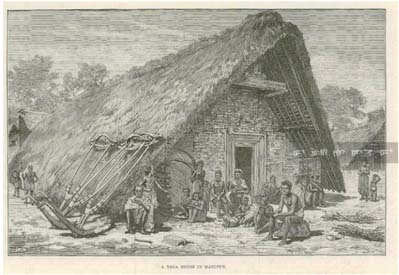 A Naga House in Manipur
The Illustrated London News,
2 May 1891
18 x 24 cm
Engraver:
On Display — Ground Floor
ARC-PRT-004
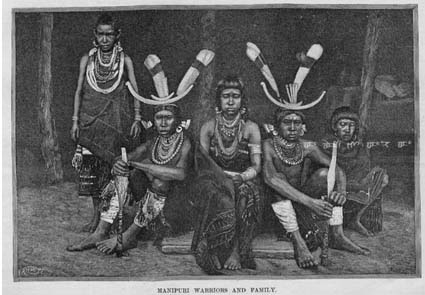 Manipuri Warriors and Family
Harper’s Weekly,
2 May 1891
14 x 21 cm
Engraver: unknown
On Display — Ground Floor
ARC-PRT-005
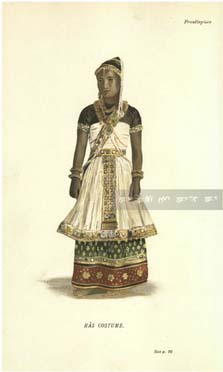 Ras Costume
The Meithei by T.C Hodson, First Edition, 1908
14 x 21 cm
Painting
Artist: Unknown
ARC-PRT-006
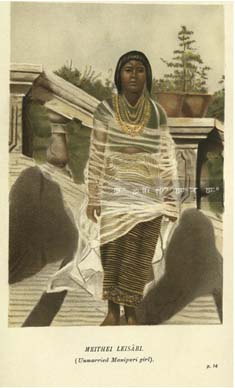 Meithei Leisabi( Unmarried Manipuri girl)
The Meithei by T.C Hodson, First Edition, 1908
14 x 21 cm
Painting
Artist: Unknown
ARC-PRT-007
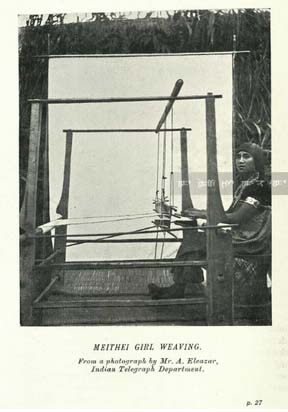 Meithei Leisabi( Unmarried Manipuri girl)
The Meithei by T.C Hodson, First Edition, 1908
14 x 21 cm
Photograph
Photographer: A.Eleazar, Indian Telegraph Department
ARC-PHP-302
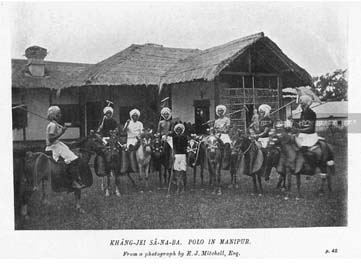 Kangjei Sanaba. Polo in Manipur
The Meithei by T.C Hodson, First Edition, 1908
14 x 21 cm
Photograph
Photographer: E.J.Mitchell, Esq
ARC-PHP-303
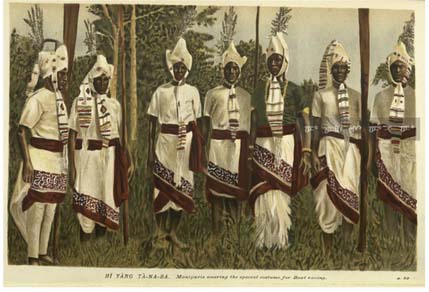 Hiyang Tanaba
( Manipuri wearing the special costume for Boat Racing)
The Meithei by T.C Hodson, First Edition, 1908
14 x 21 cm
Painting
Artist: Unknown
ARC-PRT-008
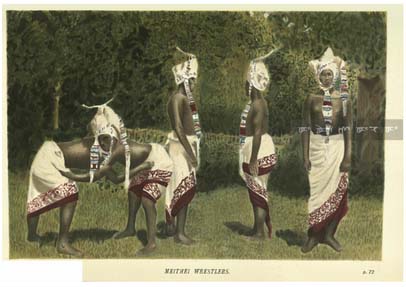 Meithei Wrestlers
The Meithei by T.C Hodson, First Edition, 1908
14 x 21 cm
Painting
Artist: Unknown
ARC-PRT-009
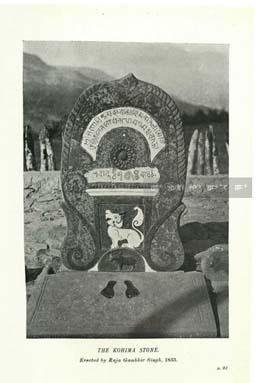 The Kohima Stone Erected by Raja Gambhir Singh, 1833
The Meithei by T.C Hodson, First Edition, 1908
14 x 21 cm
Photograph
Photographer: Unknown
ARC-PHP-0304
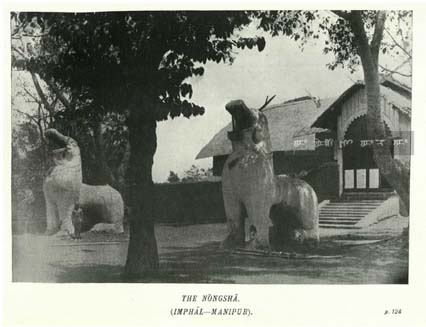 The Nongsha
Imphal-Manipur
The Meithei by T.C Hodson, First Edition, 1908
14 x 21 cm
Photograph
Photographer: Unknown
ARC-PHP-0305
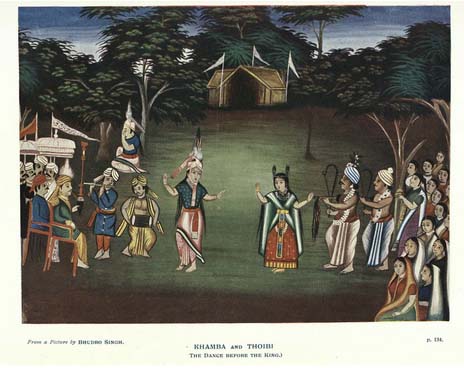 Khamba and Thoibi
(The Dance before the King)
The Meithei by T.C Hodson, First Edition, 1908
14 x 21 cm
Painting
Artist: Bhudro Singh
( Ningthoujam Bhadra Singh)
ARC-PRT-010
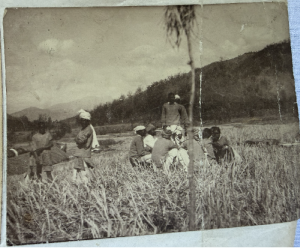
 British Period
Photographer: unknown
Custodian: Kangabam Ongbi Yumnam Shyama
Digitized on May 8, 2026
Photograph
ARC-PHP-D-432

British Period
Photographer: unknown
Custodian: Kangabam Ongbi Yumnam Shyama
Digitized on May 8, 2026
Photograph
ARC-PHP-D-433
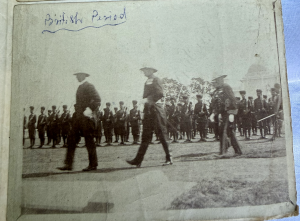
British Period
(Manipur Double Company of the First World War ?)
Photographer: unknown
Custodian: Kangabam Ongbi Yumnam Shyama
Discription: The New Govindajee Temple is seen in the background.
Digitized on May 8, 2026
Photograph
ARC-PHP-D-434
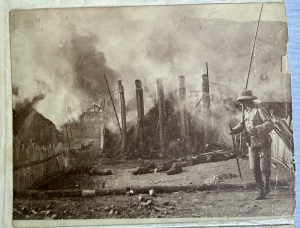
British Period
(Burning of a village in Manipur ?)
Photographer: unknown
Custodian: Kangabam Ongbi Yumnam Shyama
Digitized on May 8, 2026
Photograph
ARC-PHP-D-435
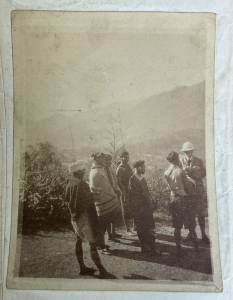
British Period
(A British officer conducting an inquiry among hill villagers in Manipur ?)
Photographer: unknown
Custodian: Kangabam Ongbi Yumnam Shyama
Digitized on May 8, 2026
Photograph
ARC-PHP-D-436

British Period
(Burning of a hill village in Manipur ?)
Photographer: unknown
Custodian: Kangabam Ongbi Yumnam Shyama
Digitized on May 8, 2026
Photograph
ARC-PHP-D-437
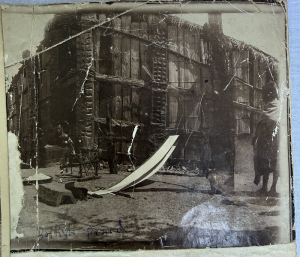
British Period
A Hill village in Manipur. A loin loom is seen.
Photographer: unknown
Custodian: Kangabam Ongbi Yumnam Shyama
Digitized on May 8, 2026
Photograph
ARC-PHP-D-438

British Period – Meitei Haraoba
Photographer: unknown
Custodian: Kangabam Ongbi Yumnam Shyama
Digitized on 8 May, 2026
Photograph
ARC-PHP-D-439

British Period
Procession of Hindus from British India ?
Photographer: unknown
Custodian: Kangabam Ongbi Yumnam Shyama
Digitized on 8 May, 2026
Photograph
ARC-PHP-D-440
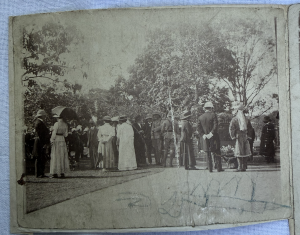
British Period
Maharaja Churachand and British ?
Photographer: unknown
Custodian: Kangabam Ongbi Yumnam Shyama
Digitized on 8 May, 2026
Photograph
ARC-PHP-D-441
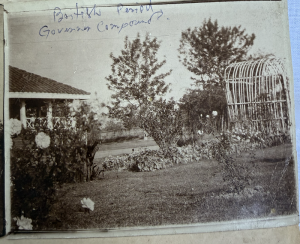
British Period ( British Residency Compound in Imphal)
Maharaja Churachand and British ?
Photographer: unknown
Custodian: Kangabam Ongbi Yumnam Shyama
Digitized on 8 May, 2026
Photograph
ARC-PHP-D-442
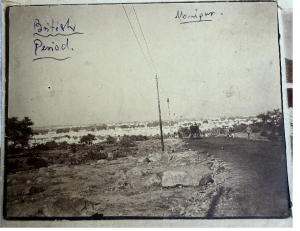
British Period in Manipur
A large number of white tents are visible.
Photographer: unknown
Custodian: Kangabam Ongbi Yumnam Shyama
Digitized on 8 May, 2026
Photograph
ARC-PHP-D-443
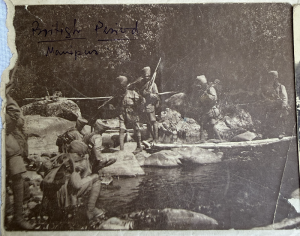
British Period in Manipur
Soldiers crossing river
Photographer: unknown
Custodian: Kangabam Ongbi Yumnam Shyama
Digitized on 8 May, 2026
Photograph
ARC-PHP-D-444

British Period (Mao community of Manipur)
Photographer: unknown
Custodian: Kangabam Ongbi Yumnam Shyama
Digitized on 8 May, 2026
Photograph
ARC-PHP-D-445
 British Period
Procession of Hindus from British India ?
Photographer: unknown
Custodian: Kangabam Ongbi Yumnam Shyama
Digitized on 8 May, 2026
Photograph
ARC-PHP-D-446
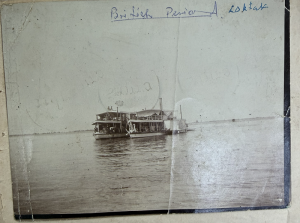 British Period (Loktak Lake)
Photographer: unknown
Custodian: Kangabam Ongbi Yumnam Shyama
Digitized on 8 May, 2026
Photograph
ARC-PHP-D-447
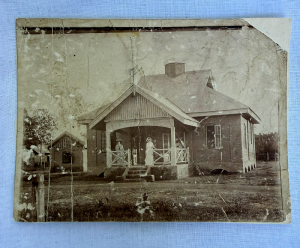 British Period (Bungalow in Manipur)
Photographer: unknown
Custodian: Kangabam Ongbi Yumnam Shyama
Digitized on 8 May, 2026
Photograph
ARC-PHP-D-448
GO-TO PAGE