- This event has passed.
PUJITA GUHA
LEARNING TO READ A FOREST
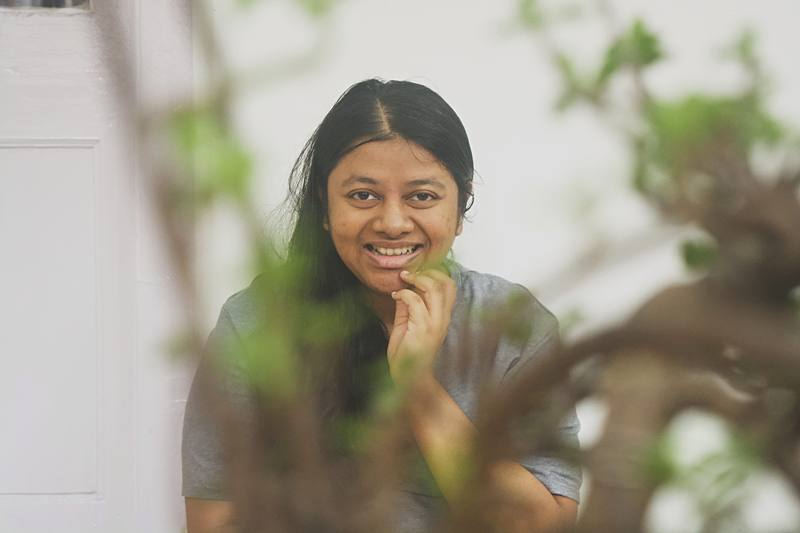
Pujita Guha is currently a doctoral candidate at the Film and Media Studies department at University of California Santa Barbara. She is an artist, curator, and academic. Her work hovers around questions of environment, media and aesthetics, and social justice.
How to read a forest?
This talk drew on her research project, Forested Media: Indigenous Lifeworlds in Upland Asia, which examines how, in the post–Cold War era (1990s–present), Indigenous communities in the region claim forest sovereignty through artistic, popular, and scientific practices. Home to multiple Indigenous communities, upland Asia refers to a continuous belt of hills and subtropical forests spanning India’s Northeast and extending into Southeast Asia and Southwest China. While the region has largely been studied by political ecologists, anthropologists, and policy experts, she focused on how media and cultural expressions provide grounded, lived, and experiential knowledge of forest-based communities.
This presentation begins from these simple questions below:
What is a forest? Is it a jungle, a swamp, bushes, canopy? Is it a national park or a reserve? Or open uncultivated land that is cleared by fire, cultivated, and left as fallow—the lifecycle of a land as it goes through jhum or swidden agriculture? What words, songs, and images come to mind when defining a forest? In this presentation, she will talk about how language, images, folktales and poetry shape how we understand what a forest is, how we experience it, and what politics—their relationship to states or
Watch the full lecture on YouTube