- This event has passed.
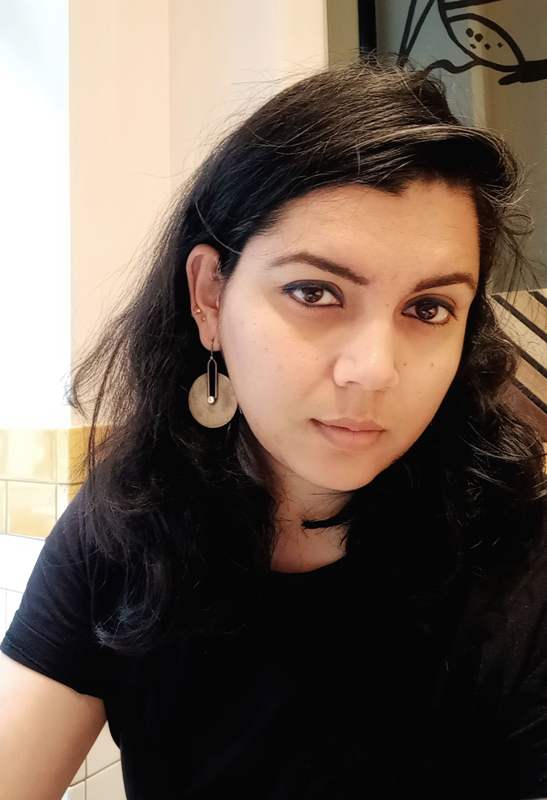
Debanjali Biswas, PhD Bodleian Libraries, C & RD, University of Oxford
Leisure, Labour and the Cultural Life of Japan Laan in Manipur
The talk charts discourses of performance, everyday life, and leisure in and around Imphal, and the battlefront in Manipur during the Burma Campaign (1942-45) of the China-Burma- India theatre. War precipitated complex conditions for creating art but demand for wartime entertainment was high, including cultural activities to boost morale, record the war and create patriotic propaganda. The cultural life of the Second World War in Europe, Great Britain and North America has been in recent focus in academic scholarship; scholars have examined the boom of dance hall culture, social dancing and popular culture in Britain (Nott 2017), ballet (Eliot 2016), Spanish French artistic encounters (Boothroyd 2012), ban of Taiwanese opera in China and Taiwan (Hsiao-Mei 2010), and prohibition on dancing itself in Finland (Tikka and Nevala 2020). But no comprehensive study of cultural life exists on the Burma Campaign, or Manipur.
Locals and foreigners approached the arts as means of escape, solace, entertainment,
distraction or to hone their skills as time slowed down. A plethora of performance cultures thrived – Imphal’s own amateur and touring theatre troupes, local clubs, dances in socio- religious ceremonies underwent change and flourish; furthermore, women’s and army amateur theatre clubs, wartime revue and traveling concert parties of Entertainments National Service Association (ENSA), United Service Organizations Inc (USO) and Bengal Entertainment Services Association (BESA) entertained the troops.
The talk argues for historical and ethnographic ways of engaging with archived remains. It offers a tapestry of wartime society and identity through which indigenous modernities and buried narratives build a history of performance during which calamitous changes were recorded, grief was expressed, heritage was preserved and lost, money was made, and culture was reinvented. Much of the unarchiving of performances will be carried out via studies of film footage and photographs, and through other previously overlooked ephemera such as war dispatches, letters, newspaper clips, reports, handbills as well as oral history. In a patchwork method, the archival remains will reveal larger contexts of viewing, staging, doing performance during Japan Laan.
Dr. Debanjali Biswas is an early career researcher in social anthropology and theatre, performance and dance studies, and has extensively trained in Manipuri, with a performing career of over two decades as a dance practitioner and a performance maker. She writes to critically engage with social, political, affective dimensions of dance in everyday life in contemporary South Asia and in the Asian diaspora. Her research on performance and heritage is studied from the intersections of marginality, precarity, resistance.
She completed her PhD from King's College London on a scholarship from the Commonwealth Scholarship Commission. She has previously read social anthropology from School of Oriental and African Studies (London) on a Felix Scholarship, and theatre and performance studies from School of Arts and Aesthetics, Jawaharlal Nehru University (New Delhi). Her writing on performance cultures has been published widely as solo and co-authored articles, book chapters, reviews, academic blogposts, and in edited collections. Over the years her research has been funded by the British Academy, Theatre and Performance Research Association, Showtown History Centre and Collections, Women’s History Network, Museum of Colour and the Smithsonian Institution. Today’s talk is part of her British Academy funded project for archival ethnography of photography and performance cultures of the communities inhabiting the north-eastern region of India.
Besides performing classical Manipuri as a soloist and ensemble artist in India and globally, Debanjali’s choreographies have been supported by the Tower Hamlets Council & Queen Mary University (London), South Asian Arts-UK (Leeds), Gati Dance Forum (New Delhi), Temple of Fine Arts (Kuala Lumpur), Künstlerhaus Mousonturm (Frankfurt), International Young Choreographers’ Project (Kaohsiung) and Indian Council for Cultural Relations
Moderator: Dr. Babina Chabungbam